
Preventive vs Routine Switchboard Maintenance: What’s the Difference?
Table of Contents
- Key Takeaways
- Why Switchboard Maintenance Matters
- Understanding the Different Types of Switchboard Maintenance
- Preventive vs Routine Switchboard Maintenance: Key Differences
- Common Tasks Included in Routine Switchboard Maintenance
- What Preventive Maintenance Typically Involves
- When Routine Maintenance Is No Longer Enough
- Building an Effective Switchboard Maintenance Strategy
- Switchboard Maintenance for Long-Term Reliability and Performance
- Frequently Asked Questions
Switchboard maintenance plays a critical role in ensuring the safety, reliability, and efficiency of electrical distribution systems. Whether supporting a manufacturing facility, commercial building, data center, or critical infrastructure project, a well-maintained switchboard helps minimize downtime, reduce safety risks, and extend equipment lifespan.
At Cantal, we often work with organizations that understand the importance of maintaining their electrical infrastructure but are unsure about the differences between routine maintenance and preventive maintenance. While both approaches contribute to the performance of a switchboard, they serve different purposes and should be used together as part of a comprehensive maintenance strategy.
Understanding how these maintenance approaches differ can help facility managers, building owners, and maintenance teams make more informed decisions about asset management, operational reliability, and long-term maintenance planning.
Key Takeaways
- Routine switchboard maintenance focuses on regular inspections and housekeeping tasks that help keep equipment operating safely and efficiently.
- Preventive maintenance involves more detailed testing and servicing designed to identify and address potential failures before they occur.
- Both maintenance approaches play important roles in improving reliability, reducing downtime, and extending switchboard lifespan.
- Facilities that rely solely on reactive repairs often experience higher maintenance costs and increased operational risks.
- An effective maintenance strategy combines routine inspections, preventive maintenance, and long-term asset management planning.
Why Switchboard Maintenance Matters
A switchboard serves as the central point of electrical power distribution within a facility. It directs electricity to different circuits while protecting equipment and personnel from electrical faults.
Because switchboards operate continuously, they are exposed to various conditions that can affect performance over time, including heat, electrical loading, dust, moisture, vibration, and component aging.
The importance of maintenance extends beyond preserving equipment condition.
IEEE 3006.3-2017 covers the impact of preventive maintenance on the reliability of industrial and commercial power systems, reinforcing the role of maintenance planning in supporting long-term system reliability.
Without proper switchboard maintenance, organizations may face:
- Unexpected power outages
- Equipment failures
- Increased fire risks
- Reduced operational efficiency
- Costly emergency repairs
- Shortened equipment lifespan
Regular maintenance helps identify potential issues before they escalate into major operational problems, supporting both operational continuity and long-term asset performance.
Understanding the Different Types of Switchboard Maintenance
Although routine and preventive maintenance are often discussed together, they are not interchangeable.
Each serves a distinct purpose within an overall maintenance program.
Routine Maintenance
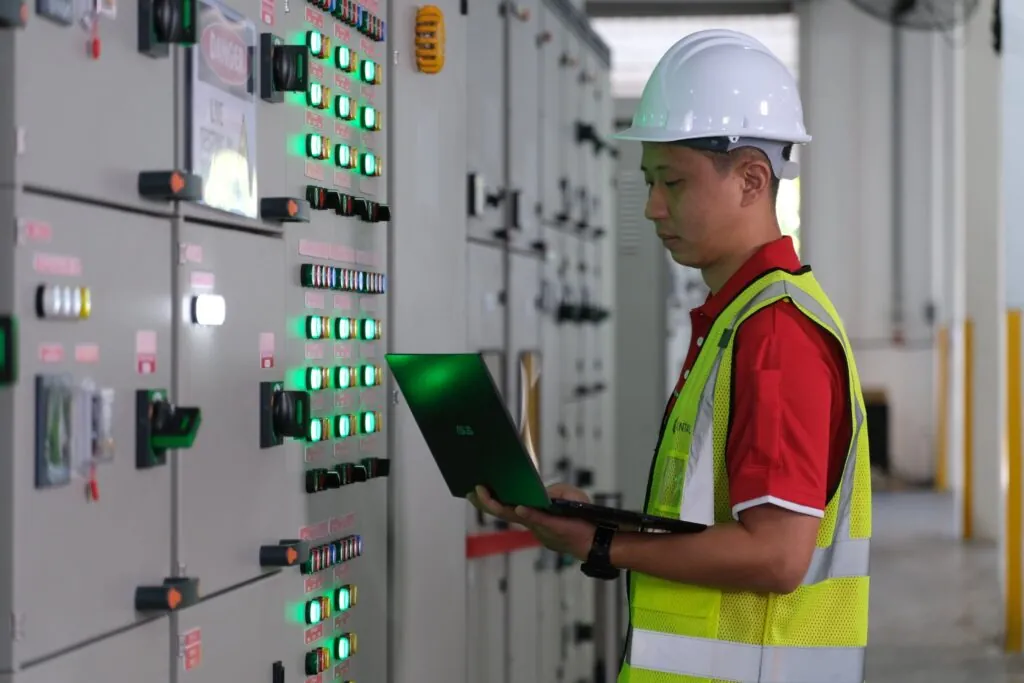
Routine maintenance consists of scheduled activities performed at regular intervals to ensure that a switchboard remains clean, accessible, and in good operating condition.
These tasks are generally straightforward and focus on identifying visible signs of deterioration or abnormal operation.
Typical routine maintenance activities include:
- Visual inspections
- Checking enclosure integrity
- Verifying warning labels and signage
- Monitoring for unusual sounds or odors
- Looking for signs of overheating or corrosion
Routine maintenance helps maintenance personnel identify obvious issues early and maintain a safe operating environment.
Preventive Maintenance
Preventive maintenance is a more structured and proactive approach.
Instead of simply checking for visible issues, preventive maintenance involves testing, servicing, and analyzing equipment conditions to identify potential failures before they affect operations.
Preventive maintenance activities often include:
- Insulation resistance testing
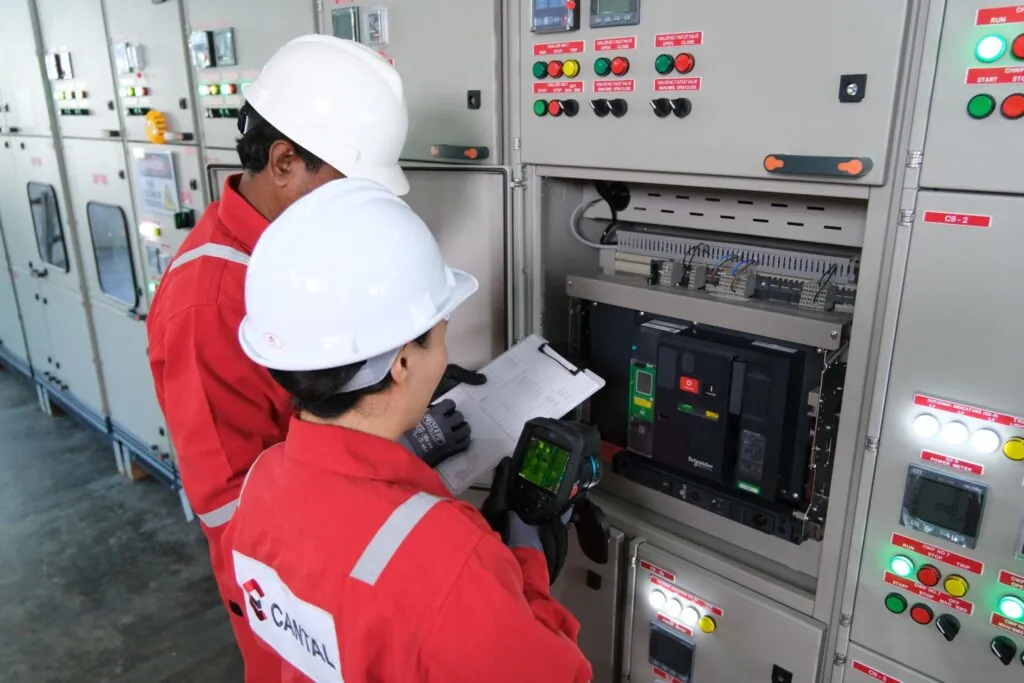
- Thermal imaging inspections
- Circuit breaker testing
- Protective relay verification
- Mechanical servicing
- Contact resistance testing
The objective is to reduce the likelihood of equipment failure and improve long-term reliability.
Corrective Maintenance
Corrective maintenance occurs after a fault or failure has already happened.
Examples include:
- Replacing damaged circuit breakers
- Repairing burnt connections
- Restoring power after equipment failure
- Replacing failed components
While corrective maintenance is sometimes unavoidable, relying heavily on reactive repairs often results in higher costs, greater operational disruption, and increased safety risks.
Preventive vs Routine Switchboard Maintenance: Key Differences
Although both approaches contribute to system performance, they differ in several important ways.
| Area | Routine Maintenance | Preventive Maintenance |
|---|---|---|
| Primary Objective | Maintain day-to-day operating conditions | Enhance equipment reliability |
| Scope | Visual inspections and basic checks | Detailed testing and servicing |
| Complexity | Relatively simple | More technical and specialized |
| Frequency | Performed regularly | Scheduled based on risk and condition |
| Equipment Downtime | Often minimal | May require planned shutdowns |
| Cost | Lower short-term cost | Higher initial investment |
| Long-Term Value | Maintains operating condition | Extends lifespan and improves reliability |
Rather than choosing one approach over the other, organizations typically achieve the best results by combining both.
Common Tasks Included in Routine Switchboard Maintenance
Routine maintenance forms the foundation of an effective maintenance program.
While these activities may appear simple, they often reveal early warning signs that warrant further investigation.
Visual Equipment Inspections
Maintenance personnel should inspect the switchboard for:
- Physical damage
- Corrosion
- Water ingress
- Dust accumulation
- Missing covers or fasteners
- Discoloration caused by heat
Even minor visual abnormalities can indicate developing issues within the system.
Housekeeping and Cleaning
Dust and contaminants can affect electrical performance over time.
Regular cleaning helps reduce:
- Insulation degradation
- Heat build-up
- Corrosion risks
- Ventilation blockages
Proper cleaning methods should always be used to avoid damaging sensitive electrical components.
What Preventive Maintenance Typically Involves
Preventive maintenance goes beyond visual inspections by evaluating the actual condition and performance of critical components.
Thermal Imaging Inspections
Thermal imaging uses infrared technology to identify abnormal temperature increases within electrical equipment.
Hotspots often indicate:
- Loose electrical connections
- Overloaded circuits
- Component deterioration
- Imbalanced electrical loads
Because thermal imaging is a non-contact inspection method, it can often be performed while equipment remains energized, provided it is carried out by qualified personnel under proper electrical safety procedures.
Electrical Testing
Testing provides insights that cannot be obtained through visual inspections alone.
Common tests include:
- Insulation resistance testing
- Contact resistance testing
- Functional testing of protection systems
- Secondary injection test
- Trip test
These tests help identify hidden problems before they result in failures.
Circuit Breaker Servicing
Circuit breakers are among the most important protective devices within a switchboard.
Preventive maintenance may include:
- Mechanical operation checks
- Lubrication of moving components
- Contact inspections
- Calibration verification
- Trip unit testing (if applicable)
A circuit breaker that fails to operate correctly during a fault event can expose personnel and equipment to significant risks.
When Routine Maintenance Is No Longer Enough
Routine inspections are essential, but there are situations where they may not provide sufficient protection.
Facilities should consider more extensive preventive maintenance when:
- Equipment is aging, especially where maintenance history is limited or operating conditions are harsh.
- Power demand has increased significantly
- Unplanned outages occur more frequently
- Components show signs of repeated overheating
- Spare parts become difficult to source
- Operations depend heavily on continuous power availability
In these situations, condition-based testing and preventive maintenance can help identify risks that visual inspections may overlook.
Building an Effective Switchboard Maintenance Strategy
The most effective maintenance programs combine routine and preventive maintenance activities based on equipment criticality, operating conditions, and business requirements.
A practical framework may include:
- Monthly visual inspections
- Quarterly housekeeping and environmental checks
- Annual thermal imaging surveys
- Scheduled electrical testing & servicing
- Periodic circuit breaker servicing
- Long-term asset condition assessments
Facilities with critical operations may require more frequent inspections and testing to support reliability objectives.
Switchboard Maintenance for Long-Term Reliability and Performance
Switchboard maintenance is not simply about keeping equipment operational today. It is about protecting long-term reliability, reducing operational risks, and maximizing the value of electrical infrastructure investments.
Routine maintenance helps identify visible issues and maintain safe operating conditions, while preventive maintenance provides deeper insights into equipment health and emerging risks. Together, these approaches form the foundation of an effective maintenance strategy.
At Cantal, we help organizations develop practical switchboard maintenance programs that support safety, reliability, and long-term performance. As an experienced electrical system integrator and one of the established switchgear manufacturers in Singapore, we work closely with clients to optimize maintenance planning for switchboards and broader power distribution systems.
Frequently Asked Questions
Can switchboard maintenance improve energy efficiency?
Yes. Loose connections, overheating components, and deteriorating contacts can increase electrical losses. Regular maintenance helps ensure the switchboard operates efficiently and supports optimal power distribution.
How long does a commercial switchboard typically last?
A well-maintained switchboard can often remain in service for 20 to 30 years or longer. Actual lifespan depends on operating conditions, maintenance practices, loading patterns, and environmental factors.
Is thermal imaging required for every switchboard?
Yes. Thermal imaging should be carried out for all switchboards as part of regular preventive maintenance. It helps detect abnormal heat, loose connections, overloaded components, and early signs of failure that may not be visible during standard inspections.
For critical or heavily loaded switchboards, thermal imaging should be done more frequently, depending on the operating condition, site requirements, and maintenance schedule.
What are common warning signs of switchboard problems?
Common warning signs include unusual noises, burning smells, visible corrosion, overheating, discoloration, nuisance tripping, and unexpected power interruptions.
How does an electrical system integrator support switchboard maintenance?
An electrical system integrator can assist with inspections, testing, upgrades, maintenance planning, system optimization, and lifecycle management to help ensure reliable and safe operation of electrical infrastructure.